Losing teeth is not just a dental issue. It changes how you eat, how you speak, and how you feel walking into a room. For Houston patients weighing their options, the question is almost always the same: can I find quality dentures that actually fit my budget without compromising on comfort or appearance? The answer is yes, but what “affordable” actually means depends heavily on which type of denture you choose, the materials used, and whether the appliance is built to serve you for years or just to get you through the door.
According to the American College of Prosthodontists, more than 120 million Americans are missing at least one permanent tooth, and over 36 million have lost all of their natural teeth. Approximately 42.5 million Americans are expected to wear dentures by the end of 2026. These numbers reflect a widespread need, one that The Comprehensive Dental Group of Houston is equipped to address with custom dentures designed around each patient’s anatomy, clinical picture, and financial situation.
This guide walks you through every denture type available in 2026, realistic cost ranges, the honest dentures vs implants comparison, how cosmetic dental financing works, and exactly what to look for when searching for custom dentures near me in the Houston area.
Key Takeaways
- Full (complete) dentures cost $1,000 to $3,600 per arch for standard options; premium custom dentures reach $3,000 to $5,000+ per arch.
- Partial dentures range from roughly $700 for interim acrylic designs to $4,200 for durable metal-framework models.
- Implant-supported dentures deliver superior stability and prevent bone loss, but cost more: typically $8,000 to $20,000+ per arch total.
- “Affordable” does not mean cheapest. Poorly fitted low-cost dentures require more adjustments and replacement cycles, often costing more long-term.
- Most dental insurance plans cover approximately 50% of denture costs up to a plan annual maximum, typically $1,000 to $2,500.
- CDGH offers flexible cosmetic dental financing so the right treatment plan is accessible regardless of upfront budget.
Find Out Which Denture Option Is Right for You
Types of Dentures: Your Options in Plain Language
The right denture type depends on how many teeth you have lost, the condition of your remaining teeth and bone, your lifestyle, and your budget. Here is a straightforward breakdown of each option.
Full (Complete) Dentures
Full dentures replace every tooth in the upper arch, lower arch, or both. They rest directly on the gum tissue and are held in place through suction and, if needed, denture adhesive. Conventional full dentures are fabricated after an 8 to 12 week healing period following extractions, so impressions can be taken from stable, healed tissue. This produces a better fit than rush-fabricated options.
Cost range: $1,000 to $3,600 per arch for standard options, and $3,000 to $5,000+ per arch for premium custom-fabricated appliances. The national average for a traditional full denture is approximately $1,968 per arch, according to CareCredit pricing data.
Immediate Dentures
Immediate dentures are placed on the same day as your extractions, so you are never without teeth during healing. Because they are made from pre-surgery impressions taken before your gums have finished healing, they require more adjustment visits and typically need to be relined or replaced with a permanent appliance once healing stabilizes, usually within 6 to 12 months.
Cost range: $1,500 to $3,500 per arch, with a national average near $2,178 per arch. Patients should budget for the follow-up reline or permanent replacement that comes after healing.
Partial Dentures
Partial dentures fill gaps when some natural teeth remain. They attach to the existing teeth using clasps and are removable for cleaning. Well-fitted partials prevent remaining teeth from drifting into empty spaces, protecting your bite and long-term jaw health.
Cost by material: Interim (temporary) acrylic partials run approximately $700. Resin-base partials average $1,500 (range $1,333 to $3,283). Flexible nylon partials average around $1,700. Metal-framework partials, the most durable option, average $2,229 (range $1,728 to $4,203).
Custom Dentures
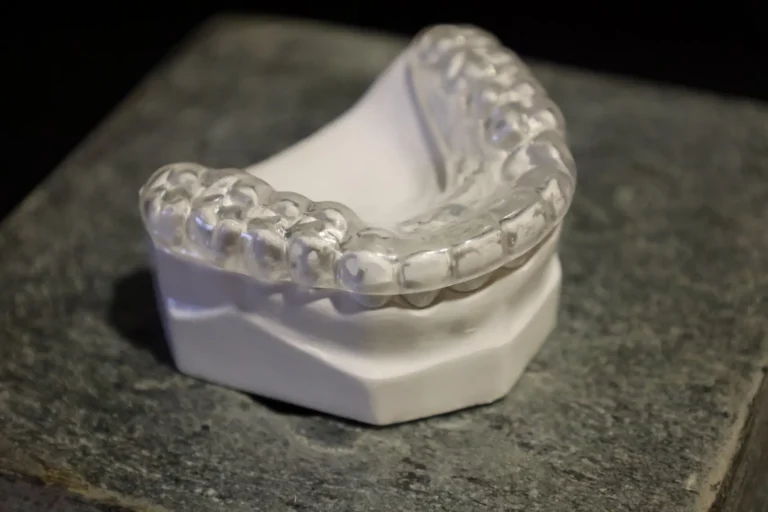
Custom dentures go beyond standard appliances. They are fabricated using digital scanning and premium materials, with careful attention to tooth shade, shape, gum color, and bite registration. The result is a restoration that looks more natural, fits more precisely, and requires fewer unplanned adjustment visits. At CDGH, our custom dentures in Houston are designed to complement your facial structure and deliver the kind of comfortable, stable fit that patients who start with basic dentures often wish they had chosen from the beginning.
Implant-Supported Dentures
Implant-supported dentures attach to two to four dental implants placed in the jawbone rather than resting on the gum surface. This provides dramatically better retention: no adhesive, no slipping while speaking or eating, and real bone stimulation that helps prevent the jawbone from shrinking. The American College of Prosthodontists suggest that significant bone loss can occur during the first year after tooth extraction when no implant support is present.
This approach is sometimes called an implant overdenture or snap-on denture. It offers a meaningful middle ground between traditional dentures and full individual implant replacement. Our implant-supported dentures page covers the full process and what to expect.
Cost range: $4,000 to $15,000 per arch for the denture portion, plus $1,600 to $2,200 per standard implant or $500 to $1,500 per mini implant. Total investment for a full implant-supported denture typically falls between $8,000 and $20,000+ per arch, depending on how many implants are placed.
Affordable Dentures: 2026 Cost Summary by Type
| Denture Type | Cost Range Per Arch | Longevity | Best For |
| Immediate (temporary) | $1,500 to $3,500 | 6 to 12 months | Post-extraction bridge solution |
| Standard full (traditional) | $1,000 to $3,600 | 5 to 8 years | Complete tooth loss, budget-conscious |
| Partial (resin base) | $1,333 to $3,283 | 5 to 7 years | Partial tooth loss, affordable entry |
| Partial (metal framework) | $1,728 to $4,203 | 8 to 15 years | Durability and stability priority |
| Custom full (premium) | $3,000 to $5,000+ | 7 to 10 years | Natural aesthetics, precise custom fit |
| Implant-supported | $8,000 to $20,000+ total | 15 to 25+ years | Maximum stability, bone preservation |
Longevity estimates assume proper daily care, regular professional maintenance, and timely relines as jaw structure changes over time. All dentures require periodic clinical assessment even when they feel comfortable, because subtle changes in fit can cause tissue irritation or bone loss before symptoms appear.
What “Custom Dentures Near Me” Actually Means
When patients search for “custom dentures near me”, they are looking for something specific: not a generic appliance from a catalog, but a restoration built from scratch around their individual mouth. The difference shows up in daily life as comfort, stability, and appearance.
Truly custom dentures involve digital scanning of the jaw, precise bite registration, laboratory fabrication using premium acrylic or porcelain teeth, and multiple fitting appointments where the appliance is adjusted until it seats naturally and comfortably. Tooth color, shape, and gum tone are individually selected to complement the patient’s age, skin tone, and facial proportions.
At CDGH, every denture case starts with a comprehensive evaluation that looks at what remains as much as what is missing. Gum health, residual bone volume, and the condition of surviving natural teeth all influence which denture type will perform best and last longest. If you are already wearing a denture that slips, causes sore spots, or looks noticeably artificial, a custom reline or a new custom appliance can make a meaningful difference. Our restorative dentistry services cover the full spectrum of restoration options.
Dentures vs Implants: Making the Right Choice
The dentures vs implants question comes up in almost every consultation about tooth loss. There is no universal answer. The right choice depends on how much bone remains, your general health, the number of missing teeth, your lifestyle, and your long-term goals.
When Dentures Make the Most Clinical Sense
Traditional or implant-supported dentures are often the better clinical fit when significant bone loss has already occurred, when surgery is not advisable due to health conditions, when most or all teeth in an arch are missing, or when budget is the primary constraint. A well-fitted custom denture genuinely restores chewing ability, speech clarity, and facial structure, and it is a legitimate, evidence-supported solution when matched to the right patient.
When Implants Represent the Stronger Long-Term Value
Dental implants replace the tooth root itself, providing the bone stimulation that dentures cannot replicate. Research published in Clinical Oral Implants Research found that areas supported by implants retain 90 to 95% of original bone volume over 20 years, compared to 40 to 60% in denture-wearing areas without implant support. Implant survival rates of 95.9 to 99.4% over 10-year follow-up periods are documented in published clinical literature. For patients with adequate bone and good general health, implants deliver the most durable, functional tooth replacement available.
For a complete comparison, visit our permanent dentures vs dental implants page and the benefits of dental implants resource.
The Middle Path: Implant-Supported Dentures
For patients who want implant-level stability but cannot undergo individual implant replacement for every missing tooth, implant-supported dentures offer a strong compromise. Two to four implants anchor the denture in place, eliminating slippage, improving bite force, and providing bone stimulation at the implant sites. The cost is considerably less than full individual implant replacement while delivering performance far superior to a conventional denture.
At CDGH, the full spectrum is available: All-on-4 dental implants, mini dental implants, same-day dental implants, and implant-supported dentures. Every patient receives an individual evaluation and a complete presentation of all viable options.
Dentures vs Implants: Side-by-Side
| Factor | Traditional Dentures | Dental Implants |
| Upfront cost | Lower ($1,000 to $5,000+ per arch) | Higher ($3,000 to $5,000+ per tooth) |
| Bone preservation | None; bone loss continues | Yes; bone stimulation maintained |
| Stability | Relies on suction or adhesive | Fixed in bone; no slipping |
| Chewing efficiency | Reduced (up to 25 to 50% less) | Comparable to natural teeth |
| Longevity | 5 to 10 years; requires replacement | 20+ years with proper care |
| Maintenance | Daily removal for cleaning; periodic relines | Brush and floss as natural teeth |
| Surgery required | No (for traditional dentures) | Yes |
| Typical insurance coverage | ~50% up to annual plan maximum | Varies; often limited |
| Best candidate | Significant bone loss; multiple teeth missing; budget priority | Adequate bone; long-term investment mindset |
Cosmetic Dental Financing and Insurance for Dentures
Cost is the most common barrier patients face. Understanding your insurance benefits and available cosmetic dental financing before your first appointment takes most of the uncertainty out of the decision.
Dental Insurance Coverage
Most dental insurance plans with major restorative benefits cover approximately 50% of denture costs up to an annual maximum, which typically ranges from $1,000 to $2,500 per year. For a $2,000 denture, insurance may cover $1,000, leaving a $1,000 out-of-pocket balance. Coverage specifics vary significantly between plans, and many impose waiting periods before major restorative benefits activate.
Original Medicare Parts A and B do not cover routine dental care or dentures. Some Medicare Advantage plans do include dental benefits. Texas Medicaid may offer partial coverage for eligible patients. Our team can help you review your coverage at your consultation. For broader context, see our does insurance usually cover general dentistry resource.
Cosmetic Dental Financing at CDGH
The Comprehensive Dental Group of Houston offers flexible payment plans through third-party financing partners, allowing patients to spread the cost of treatment across monthly installments. Many plans carry low or no interest for qualified applicants, making the monthly payment far more manageable than a single out-of-pocket charge at treatment delivery.
As a practical example: a $3,000 custom full denture with $500 down, financed at 0% over 24 months, results in monthly payments of approximately $104. If your insurance covers $1,500 of the total, the out-of-pocket balance drops to $1,000, potentially $42 per month over 24 months.
HSA and FSA funds can also be applied toward denture costs, reducing your effective out-of-pocket through the benefit of pre-tax dollars. Visit our financing page for a full overview of the payment options available, or ask at your consultation.
What to Expect During the Denture Process at CDGH
Understanding the timeline prevents surprises. The steps vary based on whether extractions are needed and which denture type you are getting.
- Consultation and exam: We assess your oral health, review X-rays, evaluate bone volume, and explain your options with transparent pricing.
- Extractions (if needed): Any teeth that cannot be saved are removed. Immediate dentures are placed the same day. Conventional dentures are fabricated after 8 to 12 weeks of healing.
- Impressions and bite registration: Precise jaw measurements are taken and sent to the dental laboratory for custom fabrication.
- Fitting appointments: You try in the appliance, provide feedback on fit and appearance, and adjustments are made before final delivery.
- Final delivery and instructions: Your denture is seated and you receive detailed guidance on wear schedules, daily care, and follow-up timing.
- Follow-up and relines: As gum tissue changes shape during healing, adjustments and eventual relines keep the fit accurate. Annual assessments are recommended long-term.
For patients who feel anxious about procedures, CDGH offers sedation dentistry to keep you comfortable throughout. If extractions are part of your plan, visit our tooth extraction services page for information on what to expect, including our same-day tooth extraction option.
How to Choose the Right Affordable Dentures Provider in Houston
Not every practice advertising affordable dentures delivers quality care. Here is what to evaluate when selecting a provider.
Multi-Specialty Expertise
Dentures work best when the clinical team evaluates not just the prosthetic itself but the supporting tissue and bone. A practice with board-certified periodontists on staff brings a depth of gum and bone expertise that directly affects how well and how long any denture performs. At CDGH, every case is reviewed by a team, not a single general practitioner.
Transparent Pricing and Written Treatment Plans
A trustworthy provider gives you an itemized written plan with clear costs before any work begins. Hidden fees for relines, adjustment visits, or laboratory charges added after the initial quote are a warning sign. CDGH provides full cost disclosure at the consultation so you know exactly what you are committing to.
Custom Fabrication Over Stock Appliances
A denture that does not fit your specific jaw anatomy will cause sore spots, slippage, and poor chewing function regardless of how low the advertised price was. Custom fabrication using digital scanning and quality laboratory work produces a restoration that actually stays in place and looks natural. This is the difference between an affordable denture and a wasted investment.
Full Range of Replacement Options on the Table
A provider that only offers dentures cannot give you an objective recommendation. CDGH presents the complete menu: traditional dentures, custom dentures, implant-supported dentures, All-on-4, mini implants, and full-mouth reconstruction. Our goal is to match you with the option that best serves your health and your budget.
Learn more about our team on the about CDGH page, and view results from real patients in our before and after gallery.
Take the First Step Toward a Comfortable, Affordable Smile
Related Articles
- Custom Dentures in Houston, TX
- Implant-Supported Dentures in Houston
- Permanent Dentures vs Dental Implants
- Benefits of Dental Implants
- All-on-4 Dental Implants in Houston, TX
- Restorative Dentistry in Houston, TX
- Sedation Dentistry in Houston, TX
- Financing Options at CDGH
Frequently Asked Questions: Affordable Dentures in Houston
How much do affordable dentures cost in Houston, TX?
In Houston, standard full dentures range from $1,000 to $3,600 per arch, with premium custom dentures reaching $3,000 to $5,000+ per arch. Partial dentures start around $700 for interim acrylic designs and go up to $4,200 for metal-framework models. Immediate dentures average approximately $2,178 per arch nationally. Implant-supported dentures, which prevent bone loss and eliminate slipping, typically total $8,000 to $20,000+ per arch including implant placement. The most accurate number for your specific situation comes from a clinical evaluation, which CDGH offers at no cost through our complimentary consultation.
What makes custom dentures different from standard dentures?
Custom dentures are built specifically for your jaw using digital scans, premium materials, and individual attention to tooth color, shape, and gum tone. Standard or stock dentures use more generic sizing and often require significantly more adjustment visits to achieve even basic comfort. Patients who invest in custom dentures from the start generally experience fewer sore spots, less slippage, a more natural appearance, and a longer interval before reline or replacement is needed. The upfront cost is higher, but the per-year cost over the life of the appliance is often lower than repeatedly adjusting a poorly fitted basic denture.
What is the real difference between dentures and implants?
Traditional dentures rest on the gum surface and do not stimulate the underlying jawbone. This means bone loss continues after tooth extraction, which gradually changes the shape of your jaw and causes the denture to fit less securely over time. Dental implants are placed in the bone itself and replicate the function of a tooth root, preserving bone density. Research published in Clinical Oral Implants Research found that implant-supported areas maintain 90 to 95% of original bone volume over 20 years compared to 40 to 60% in areas relying on conventional dentures alone. Implants also provide a fixed, non-slipping restoration with full chewing force. For patients who qualify based on bone density and general health, implants are the more durable long-term investment. For patients with significant bone loss or health constraints, well-fitted custom dentures remain a clinically valid and effective solution. See our permanent dentures vs dental implants page for a detailed comparison.
Does dental insurance cover affordable dentures?
Most dental insurance plans with major restorative coverage pay approximately 50% of denture costs up to an annual maximum, typically $1,000 to $2,500 per year. This leaves a meaningful out-of-pocket portion for most patients, but it significantly reduces the total. Original Medicare does not cover dentures. Some Medicare Advantage plans include dental benefits, and Texas Medicaid may offer partial coverage for eligible patients. Confirm your specific plan details before your first appointment and bring your insurance information to your consultation at CDGH. Our team will review your coverage and apply it to your treatment plan before any work begins.
What cosmetic dental financing options are available at CDGH?
The Comprehensive Dental Group of Houston offers payment plans through third-party financing partners, allowing patients to spread the cost of treatment over 12 to 24 months. Many plans carry low or no interest for qualified applicants. HSA and FSA funds can also be applied toward denture costs. On a $3,000 custom denture with $500 down financed at 0% over 24 months, monthly payments are approximately $104. With insurance covering $1,500 of the cost, the monthly obligation could be under $50. Visit our financing page for full details, or discuss options at your consultation.
How long do dentures last?
Longevity varies by type and care. Standard full dentures typically last 5 to 8 years before the jaw ridge has changed enough that the appliance no longer fits properly. Metal-framework partial dentures can last 8 to 15 years with appropriate maintenance. Immediate dentures are temporary and usually replaced within 6 to 12 months after healing. Premium custom dentures with higher-grade materials may last 7 to 10 years. Periodic professional relines, where the denture base is remade to fit the changed jaw contour, extend the functional life of any denture between full replacements. Annual dental visits remain important for all denture wearers to monitor tissue health and catch fit changes before they cause problems.
Can I get implant-supported dentures if I already wear traditional dentures?
In many cases, yes. Current denture wearers can transition to implant-supported dentures if adequate bone density remains to support implant placement. If significant bone loss has already occurred, a bone graft may be required first. CDGH evaluates bone volume through digital imaging at your consultation and determines whether you are a candidate for implant support, and which type of implant solution fits your specific anatomy and budget. Our can you get dental implants with bone loss page addresses this question in more detail.
What should I expect during the adjustment period after getting dentures?
Most patients need several weeks to adapt to a new denture. Soreness in the early days is normal and resolves with professional adjustments. Speech often sounds slightly different at first as the tongue learns to work around the new palate shape, and normalizes within a few weeks. Eating takes adjustment: starting with soft foods and working up to a full diet is recommended. Follow-up appointments at one week, one month, and six months are standard as the gum tissue heals and changes shape. Relines, where the denture base is refitted to the evolving gum contour, are an expected part of long-term denture care. Annual visits are important even for full denture wearers to monitor oral tissue health and bone changes.
Why does CDGH offer implants and dentures rather than recommending one over the other?
Because the right answer genuinely depends on the individual patient. A provider that recommends the same solution for every patient is not providing clinical guidance; they are pushing a product. At The Comprehensive Dental Group of Houston, we present the full spectrum of options available, including conventional dentures, custom dentures, implant-supported dentures, All-on-4, and individual dental implants. Our multi-specialty team evaluates your bone density, oral health, systemic health, lifestyle, and budget, and then recommends what will actually serve you best. That is the standard of care our patients deserve.
References
- American College of Prosthodontists: Facts & Figures on tooth loss prevalence and denture use in the United States, including 120 million Americans missing at least one tooth. https://www.gotoapro.org/facts-figures/
- CareCredit: How Much Do Dentures Cost? National average cost data for full, immediate, and partial dentures by type and material. https://www.carecredit.com/well-u/health-wellness/denture-cost/
- CareCredit: 13 Types of Dentures and Average Costs Explained. Per-type pricing for resin, metal, and flexible partial dentures. https://www.carecredit.com/well-u/health-wellness/types-of-dentures/
- Authority Dental: Dentures Cost With & Without Insurance (2026 Prices). Per-material average cost data for partial dentures with insurance breakdown. https://www.authoritydental.org/how-much-do-dentures-cost
- PubMed/NIH: Clinical Performance and Longevity of Implant-Assisted Removable Partial Dentures Compared to Other Removable Prosthesis Types: A Systematic Review (2025). Implant survival and complication rate data. https://pubmed.ncbi.nlm.nih.gov/41002662/
- Clinical Oral Implants Research (cited in peer-reviewed literature): Bone volume retention data comparing implant-supported and conventional denture sites at 20-year follow-up. Referenced via https://scholarshub.net/long-term-dental-implants-debunking-myths-and-understanding-longevity/

The Comprehensive Dental Group of Houston
The Comprehensive Dental Group of Houston is a premier Houston dental practice specializing in advanced dental implants, cosmetic dentistry, and comprehensive smile care. With a commitment to comfort, innovation, and exceptional patient outcomes, the team provides expert educational resources designed to help patients make confident, informed decisions about their oral health.